
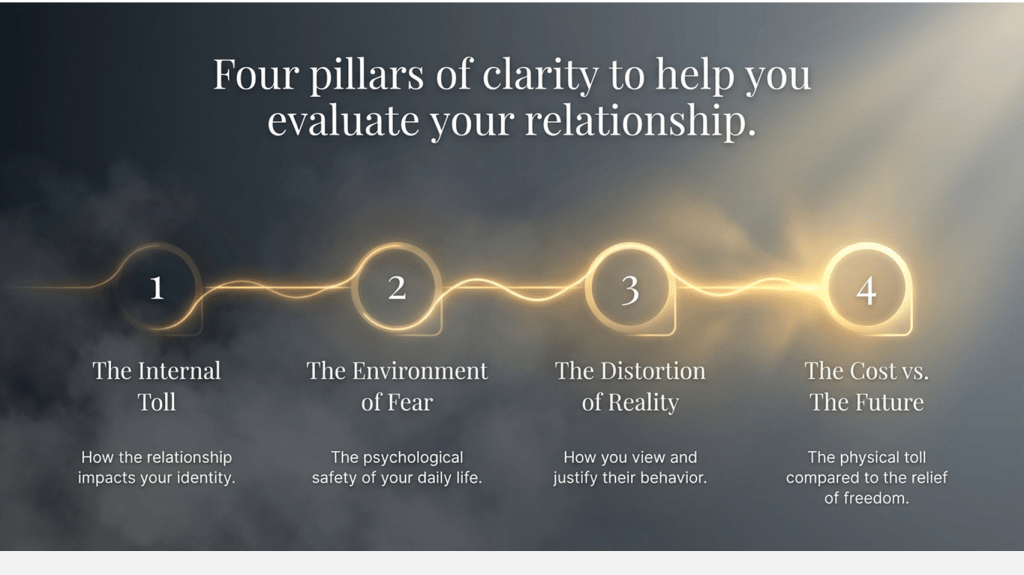
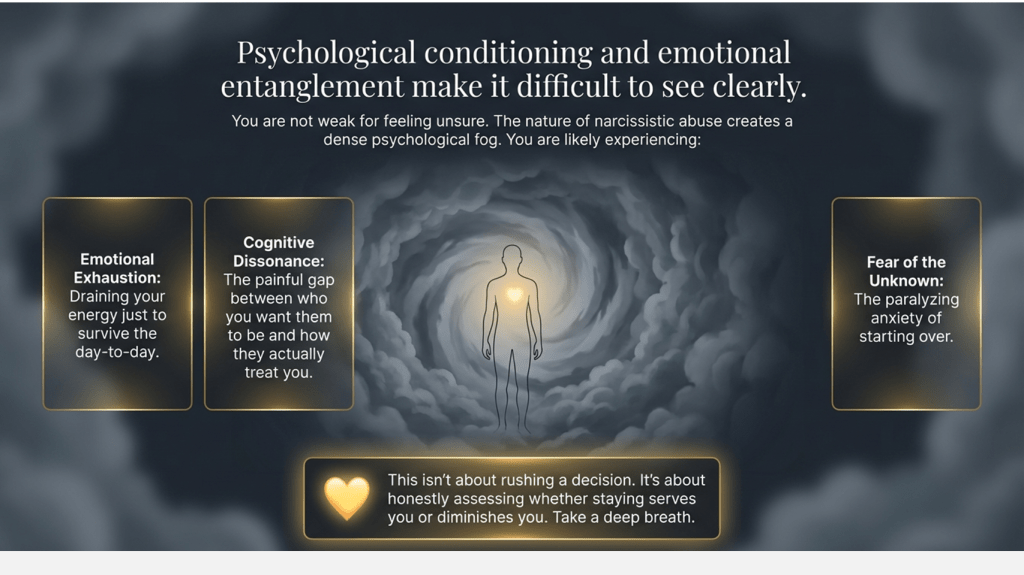
Leaving a narcissistic relationship is one of the hardest yet most liberating decisions a person can make. The psychological conditioning, emotional entanglement, and fear of the unknown often make it difficult to see the relationship for what it truly is: toxic and draining.
If you’re unsure whether it’s time to leave, asking yourself the right questions can bring much-needed clarity.
This isn’t about rushing a decision. It’s about honestly assessing your well-being and whether staying serves you or diminishes you.
Take a deep breath. Reflect on these 10 questions with honesty and self-compassion. Your answer may reveal more than you realize.
1. How Do I Feel About Myself When I’m Around This Person?
A relationship should make you feel valued, respected, and appreciated, not small, unworthy, or invisible.
- Do you feel confident and empowered, or do you constantly question yourself?
- Do you feel loved for who you are, or do you feel like you have to earn affection?
- Do you recognize the person you were before this relationship, or have you lost parts of yourself?
💛 Reflection: A relationship should enhance your self-worth, not erode it. If being around them makes you feel lesser, something isn’t right.
2. Am I Constantly Walking on Eggshells to Avoid Conflict or Criticism?
Narcissists create an environment where their partner lives in fear of setting them off.
- Do you overanalyze every word, every action to avoid upsetting them?
- Have you adjusted your personality, opinions, or preferences to keep the peace?
- Do you feel a sense of relief when they’re not around, rather than missing them?
💛 Reflection: Constantly managing someone else’s emotions at the expense of your own is a huge red flag. Healthy relationships don’t require you to suppress yourself just to keep things calm.
3. Do I Feel Emotionally Safe Expressing My Needs and Feelings?
Healthy relationships thrive on open communication, emotional safety, and mutual respect.
- When you express your feelings, do they listen and acknowledge them, or dismiss and belittle you?
- Do they twist your words or make you feel guilty for even having needs?
- Have you stopped expressing yourself altogether because it’s just easier to stay silent?
💛 Reflection: You deserve a relationship where your thoughts, emotions, and boundaries matter. If you’re scared to speak up, that’s a warning sign.
4. Does This Relationship Align with My Values and Goals for the Future?
Your relationship should be a supportive space that allows you to grow into the best version of yourself.
- Do you feel like this relationship aligns with your long-term vision for your life?
- Are your dreams, aspirations, and independence supported, or do they make you feel guilty for wanting more?
- Can you picture a fulfilling future together, or does the thought of the future bring anxiety?
💛 Reflection: Love should not require sacrificing your dreams or values. If staying means shrinking yourself, reconsider why you’re holding on.
5. Am I Growing or Shrinking in This Relationship?
A healthy relationship encourages growth, learning, and self-improvement. A toxic relationship makes you question your worth, doubt yourself, and lose your spark.
- Do you feel like you’re expanding into a better version of yourself, or do you feel trapped?
- Has your confidence grown, or do you second-guess yourself more than ever?
- Are you emotionally, mentally, and spiritually evolving, or do you feel stagnant?
💛 Reflection: If a relationship prevents you from thriving, it’s not love. It’s control.
6. How Often Do I Feel Drained, Anxious, or Stressed Because of This Person?
Toxic relationships create emotional exhaustion that seeps into every area of life.
- Do you feel a constant undercurrent of stress in their presence?
- Do your nervous system and body react with tension when they call or text?
- Does your emotional state depend on their mood, leaving you in constant uncertainty?
💛 Reflection: If being with someone feels more like surviving than thriving, your body is already telling you something is wrong.
7. Do I Find Myself Making Excuses for Their Behavior to Others or Myself?
If you find yourself justifying their mistreatment, it’s worth taking a closer look at why.
- Have you told yourself, “They’re not always like this” or “It’s just stress”?
- Do you minimize their manipulation, criticism, or emotional neglect?
- Have friends or family expressed concern, but you brushed it off?
💛 Reflection: If you constantly defend their actions to yourself or others, ask why. Healthy love doesn’t need excuses.
8. What Would My Life Look Like If I Chose to Leave?
Imagine waking up without the weight of their manipulation.
- What would your days feel like if you weren’t managing their emotions?
- What goals, dreams, or passions could you pursue freely?
- Would you feel relief, peace, or even a sense of possibility?
💛 Reflection: If the thought of leaving brings more hope than fear, your answer may already be clear.
9. If a Loved One Were in My Position, What Advice Would I Give Them?
We often see things more clearly when it’s someone else’s life.
- If your best friend or sibling were in your shoes, what would you tell them?
- Would you encourage them to stay, or would you want them to leave?
- What would you wish for them: peace, freedom, or more years of suffering?
💛 Reflection: If your advice for someone else is different from what you’re telling yourself, ask why. You deserve the same care and protection you’d want for a loved one.
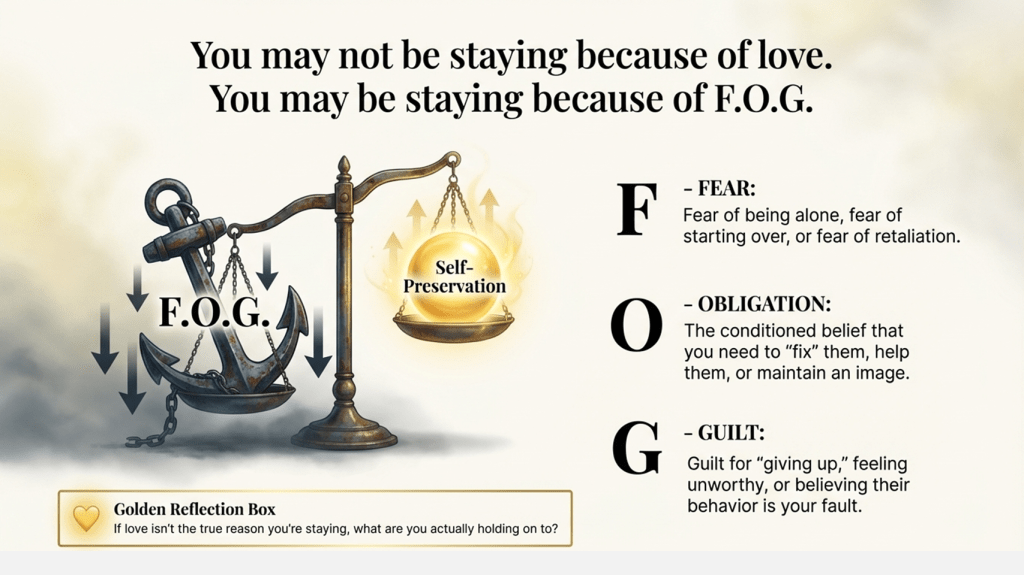
10. Am I Staying Out of Fear, Obligation, or Guilt Rather Than Love?
Fear, obligation, and guilt often keep people stuck in toxic relationships.
- Fear of being alone, starting over, or retaliation.
- Obligation to “fix” them, help them, or maintain an image.
- Guilt for “giving up,” feeling unworthy, or believing it’s their fault.
💛 Reflection: If love isn’t the reason you’re staying, what are you truly holding on to?
Final Thoughts: Trust Your Own Answers
If these questions brought up uncomfortable truths, that’s okay. Clarity is the first step toward healing.
- You don’t need permission to leave a relationship that hurts you.
- You don’t have to justify your decision to protect your peace.
- You are not responsible for changing or saving them.
💛 Leaving a narcissist is not weakness. It’s reclaiming your life.
If you’re still uncertain, that’s okay. Keep listening to yourself. Keep asking the hard questions. Your clarity will come. And when you’re ready, you’ll know what to do.
💬 Have you ever struggled with the decision to leave a toxic relationship? What helped you gain clarity?



 MomentousRise®
Drop us a line in the comments below!
You must be logged in to post a comment.